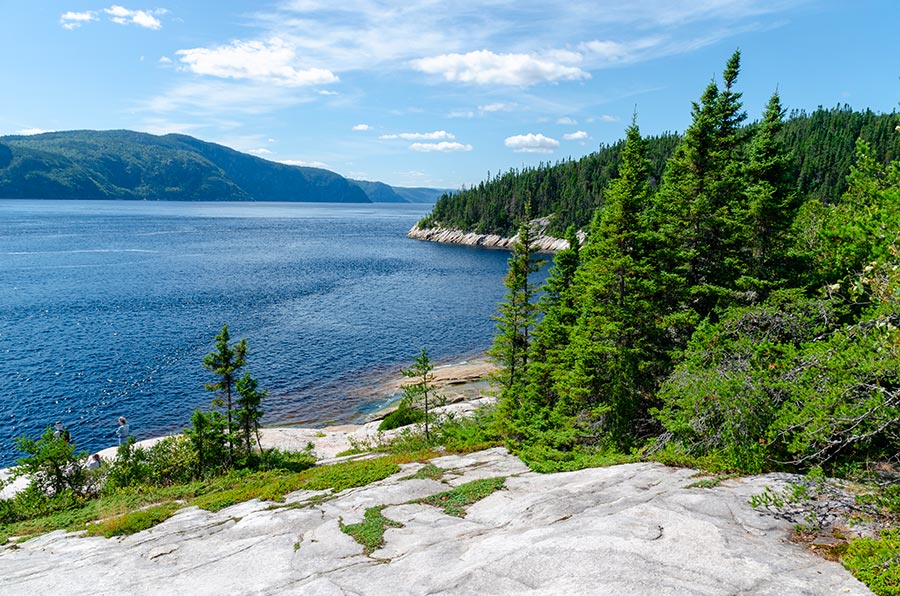
Pointe-de-l'Islet Lookout
Early morning
Capture the confluence of the Saguenay and St. Lawrence rivers from this elevated rocky plateau. Early morning light provides the clearest views of surfacing whales.

At Tadoussac the Saguenay Fjord empties into the St. Lawrence estuary, and the shelf drops away only a few hundred metres from the rocks. That geography puts feeding whales within sight of people standing on dry land. This guide explains what the shoreline actually delivers, when to stand there, and how it differs from a boat departure.
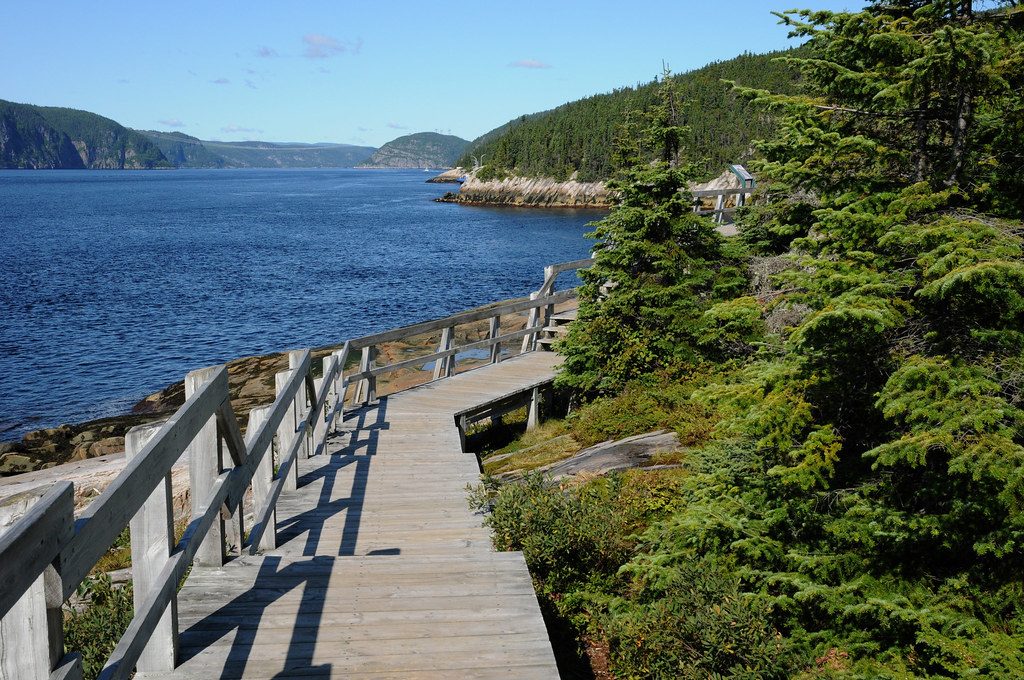
Quick answer
Yes — whales are regularly visible from land in Tadoussac, most reliably from the Sentier de la Pointe-de-l'Islet, which is free to enter at 0 CAD and open around the clock. The recommended arrival window is 06:00–20:00, with early morning and evening offering calmer water. Sightings are never guaranteed; minke and beluga appear most often, fin and blue whales far less predictably.
The underwater canyon at the mouth of the Saguenay Fjord reaches depths of more than 200 metres within sight of Tadoussac's church steeple. Cold, nutrient-rich water is forced upward where the fjord meets the St. Lawrence estuary, concentrating krill and capelin into dense columns. Whales follow that food. The result is one of the few places in the world where large cetaceans feed close enough to a public footpath that a person with no boat ticket and no equipment can watch them surface. This is the practical basis for tadoussac whale watching from shore, and it explains why the village fills with tripods every summer between June and October. The primary land-based vantage is the Sentier de la Pointe-de-l'Islet, a short looped path around a rocky headland administered within the Saguenay–St. Lawrence Marine Park. It sits at the eastern edge of the village, past the Hôtel Tadoussac and the beach. Interpretation panels along the route identify the species most often recorded here: beluga, minke, harbour porpoise, grey seal, and — in stronger years — fin and humpback whales. Observation de baleines depuis la rive, as the practice is known locally, rewards patience rather than movement. Experienced watchers pick one point on the water, scan a narrow arc, and listen. A beluga's blow is soft and easily missed; a minke surfaces with a low, rolling exhale that carries across still water. Binoculars in the 8x42 range are more useful than a long camera lens, and a windproof layer matters even in August, when the estuary wind runs cold off the current. What the shoreline cannot offer is proximity. Boats leave from the municipal wharf and reach feeding grounds in the estuary that no headland reaches; land watchers trade closeness for cost, flexibility, and the absence of a schedule. Many visitors do both, using the trail on arrival evenings and a departure on a settled morning. The Marine Park's Centre d'interprétation des mammifères marins, a short walk from the wharf, publishes recent sighting records that help calibrate expectations before anyone commits an afternoon to the rocks. Weather governs everything. Flat water reveals blows and dorsal fins at a kilometre; a two-foot chop hides a minke at two hundred metres. Fog is common in the estuary and can close the view for hours without warning. Tide matters too, since currents at the fjord mouth push prey toward the point on the rising water. Anyone planning a Tadoussac whale watching from shore guide of their own should treat sighting reports as probabilities, not promises. For confirmed conditions and park information, the site is reachable at 418-235-4703 or through sepaq.com.
“Land watchers trade closeness for cost, flexibility, and the absence of a schedule.”
The best arrival window for whale watching from the Sentier de la Pointe-de-l'Islet is 06:00–20:00. This timeframe offers the highest visibility for marine mammals, with early morning and evening hours providing the calmest water conditions.
Warm, 15°C to 25°C; peak activity. This season offers the highest frequency of whale sightings from the shore.
Cool, 5°C to 15°C; variable conditions. Marine life remains active as migration patterns continue into autumn.
—
These times provide the quietest environment for spotting whales. Calm waters improve visibility for land-based observation.
Verdict: The best slot for shore-based whale watching is early morning during the months of June or September to balance optimal water clarity and lower visitor numbers.
The Sentier de la Pointe-de-l'Islet trail remains accessible to visitors throughout the week. The path is open daily to accommodate those observing the Saint Lawrence River.
The Sentier de la Pointe-de-l'Islet is located at Sentier de la Pointe-de-l'Islet, Tadoussac, QC G0T 2A0, Canada. The most direct approach is via Route 138, which connects Tadoussac to the rest of the north shore.
Route 138 to Tadoussac, following signs for the ferry or the Saguenay-St. Lawrence Marine Park
From the Tadoussac village center, walk toward the marina and the historic chapel
Parking is available near the Tadoussac marina and the historic chapel, which serves as the primary access point for the trail. Plan your arrival within the 06:00–20:00 window to maximize your time for observing marine mammals.
Early morning
Capture the confluence of the Saguenay and St. Lawrence rivers from this elevated rocky plateau. Early morning light provides the clearest views of surfacing whales.
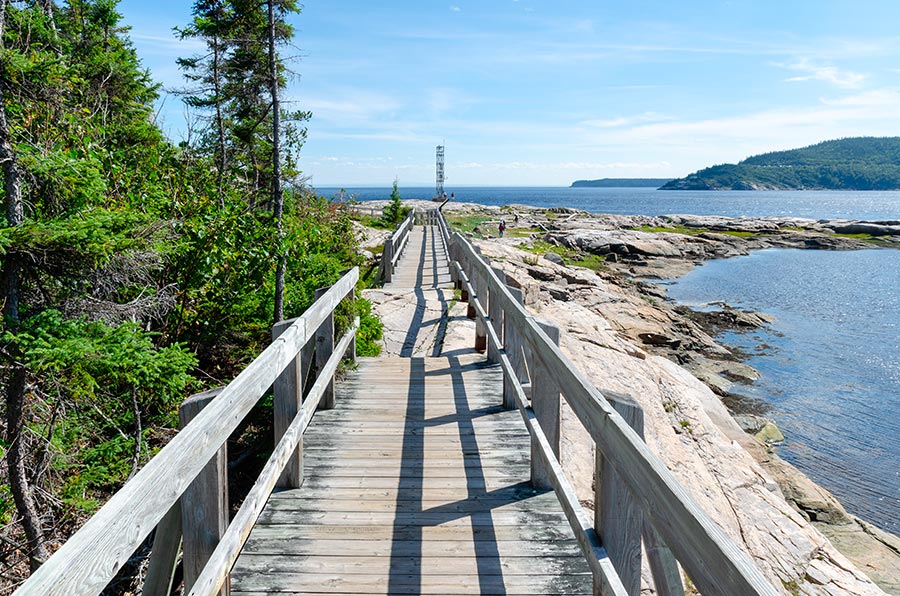
Daylight hours
The wooden trail provides a stable platform for telephoto lenses near the shoreline. Access is level and follows the rugged coastline.
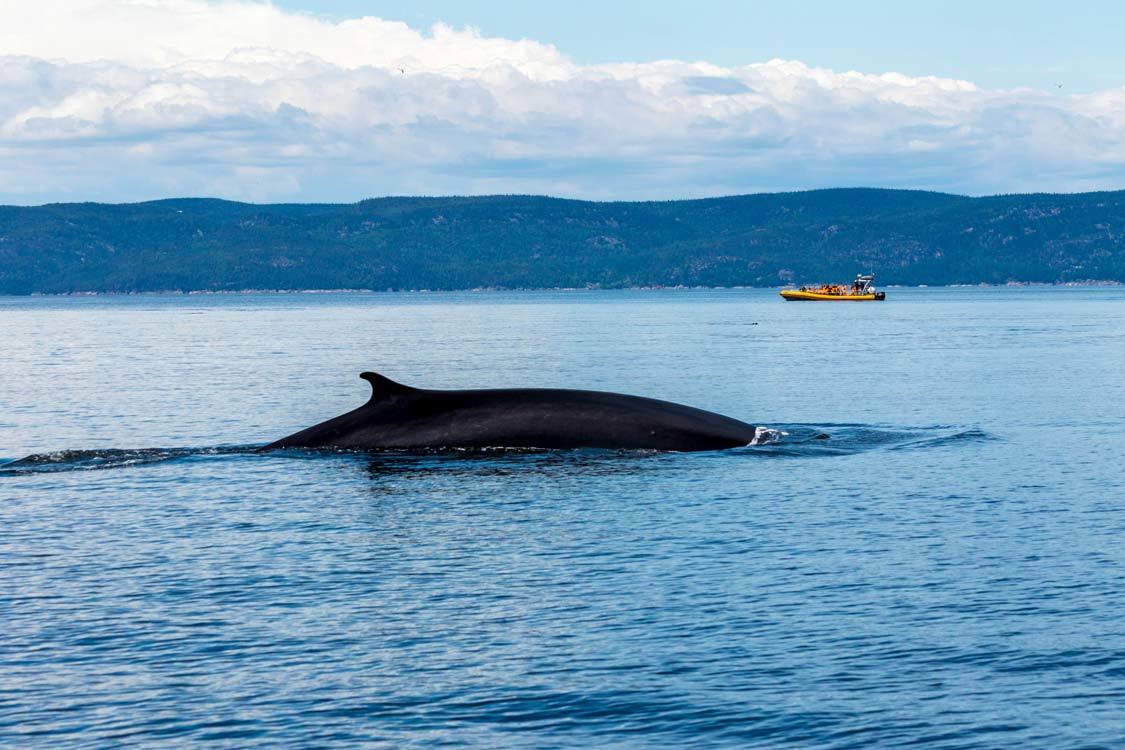
Early morning or evening
This area offers a direct line of sight to the deep water channel where whales frequently feed. Use a tripod for stability during long-range shots.
The Pointe-de-l'Islet trail sits on fragile coastal rock above a marine protected area, and shore-based watching only works when whales surface undisturbed. How visitors behave on the headland decides whether belugas stay close and whether the lichen-covered granite survives the season.
Everything you need to know about tadoussac whale watching from shore
Yes, enjoying the coastal views and potential marine sightings is completely free of charge. You can access the public trail without needing to pay any entrance fee.
The Sentier de la Pointe-de-l'Islet is widely recognized as a premier location for viewing. Following this coastal path provides excellent vantage points over the Saguenay-St. Lawrence Marine Park.
The recommended arrival window is between 06:00 and 20:00. These hours provide optimal visibility for spotting wildlife, with early morning and evening often offering calmer water conditions.
The trail remains accessible 24 hours a day throughout the week. You can plan your visit at any time from Monday through Sunday.
While observing from land is a unique experience, consider booking a boat tour for a closer encounter with these aquatic giants. These marine excursions depart regularly and offer a different perspective of the local biodiversity.
The trail is located at Sentier de la Pointe-de-l'Islet, Tadoussac, QC G0T 2A0, Canada. You may reach out to 418-235-4703 for any specific navigational inquiries regarding your arrival.
Tadoussac Charlevoix Whale Watching Tours
Read more Tickets & toursWhale Watching Tours from Quebec City
Read more Tickets & toursWhale Watching Tours from Montreal
Read more Tickets & toursWhale Watching & Fjord Exploration
Read more Tickets & toursWhale Watching Vacation Packages
Read more Tickets & toursTadoussac Zodiac Whale Watching Tours
Read more GuideBest Time for Whale Watching in Tadoussac
Read more